Insights on AI governance, public sector innovation, and democracy
Showing 15 of 23 results in category "AI Infrastructure"
AI Infrastructure
The $170 billion lesson data center developers keep learning the hard way
Governors from Healey to Shapiro now say data centers need local buy-in, but they haven't said what a community "yes" actually looks like. Since 2024, at least 46 projects representing more than $170 billion have been blocked, withdrawn, or stalled, often because engagement started after the key decisions were made and benefits were whatever developers chose to offer. Deals in West Virginia, Louisiana, Texas, and Lancaster, Pennsylvania show the terms can be negotiated, but only if states give communities the capacity to take part: early information, independent expertise, and a process that developers can pay for without owning.
Published on Sep 28, 2026 by Dr. Deborah Stine and Beth Simone Noveck
AI Infrastructure
What Is AI For? Four Questions Guiding Reboot This Fall
The public conversation about AI has swung from exuberance to alarm, casting AI as an unstoppable force. That framing overlooks the fact that public institutions design, build, buy, and regulate AI, and societies still choose where it leads. This fall, Reboot is organizing its coverage around four connected questions: what capabilities public institutions need, how they can become institutions that listen and learn, what public AI infrastructure requires, and how we measure whether AI is actually creating public value.
Published on Sep 14, 2026 by Beth Simone Noveck and Elana Banin
AI Infrastructure
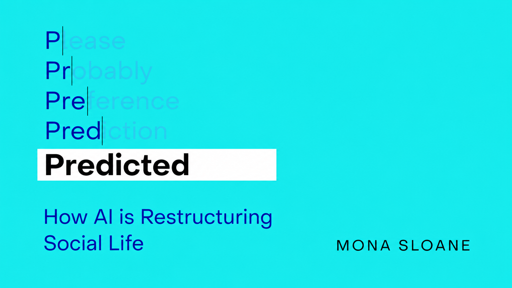
AI Is Infrastructure. Govern It Accordingly.
As prediction increasingly shapes decisions about jobs, healthcare, education, and public services, the next frontier is how it organizes society. Drawing on the history of the railroads, this essay argues that policymakers already have a blueprint for governing essential technologies: treat AI as infrastructure, apply public oversight, and ensure that systems central to modern life serve the public interest rather than private power.
Published on Aug 3, 2026 by Mona Sloane
AI Infrastructure
From AI Adoption to Public Value: InnovateUS Fall 2026 Live Learning Series
AI adoption in government is accelerating. The next challenge is making sure it creates public value. InnovateUS’s Fall 2026 Live Learning Series explores how public professionals can move beyond using AI to measuring its impact, governing it responsibly, and ensuring it improves outcomes for the people and communities government serves.
Published on Jun 30, 2026 by Agueda Quiroga
AI Infrastructure
An Open Society Needs an Open Market: The Compute Problem Cities, Regions, and Nations Share
A new report from the Canadian Anti-Monopoly Project argues that cloud sovereignty is about more than building domestic alternatives. It is about ensuring governments, businesses, and public institutions have autonomy and agency. Using Canada’s highly concentrated cloud market as a case study, the authors explore how procurement policy, competition rules, and interoperability standards could reduce dependence on hyperscalers and create a more competitive marketplace for compute.
Published on Jun 24, 2026 by David Eaves and Curtis McCord
AI Infrastructure
Research Radar: 10 Things Public Officials Should Know About AI Data Centers
AI data centers are arriving in communities long before most public institutions have figured out how to govern them. Drawing on recent analysis, fieldwork, and an InnovateUS workshop, Deborah Stine examines the questions public officials are now confronting around electricity, water, jobs, infrastructure, public trust, and community impact. She argues that AI data centers are far more than technology projects; they are major public policy decisions that will shape how communities experience the AI economy.
Published on Jun 2, 2026 by Dr. Deborah Stine
AI Infrastructure
A Dozen Interns on Cocaine: What One of the Longest-Running Civic Tech Projects Reveals About AI in Government
What happens when governments rely on systems that sound right instead of being right? Drawing on OpenFisca’s spread from France to governments across Europe, Africa, and Oceania, Beth Simone Noveck’s interview with Matti Schneider makes the case for public infrastructure that computes the law, as well as the risks of sidelining it as generative AI scales globally.
Published on Apr 22, 2026 by Beth Simone Noveck
AI Infrastructure
How we used AI to lift the voices of California state employees
Using AI to analyze over 2,400 employee comments, California’s Engaged California team found that the challenge wasn’t the scale of the data, but making sense of complex, layered input without oversimplifying it. Their experience shows why human judgment remains essential, from building taxonomies to catching errors, as results can shift significantly depending on how AI is applied and what people choose to trust and prioritize.
Published on Apr 21, 2026 by Summer Mothwood
AI Infrastructure
The AI Agents are Here: A Technical Blueprint for Governments
AI agents are reshaping how systems operate across sectors. This piece argues that the imminent challenge to address is autonomy, including how agents act, interact, and scale in open environments. It outlines a three-part blueprint for governments to build trust infrastructure, prepare for multi-agent risks, and develop the institutional capacity needed to govern an increasingly agentic world.
Published on Mar 30, 2026 by Sarosh Nagar and David Eaves
AI Infrastructure
Built Against Its People: Iran’s AI Infrastructure of Control
Dr. Sara Bazoobandi examines how Iran’s doctrine of “knowledge jihad” shaped the development of its digital and AI infrastructure, transforming technology into an instrument of state control. The piece traces how this system, built for surveillance and centralized authority, has also created strategic fragility, offering a cautionary lesson for democracies designing the foundations of AI governance.
Published on Mar 18, 2026 by Sara Bazoobandi
AI Infrastructure
Building an “Agentic Middleware” for the City Government: Boston’s Experiment with Model Context Protocol
Boston is preparing for a future where AI agents increasingly interact with government systems. In this interview, Boston's Chief Information Officer Santiago Garces explains how the city is experimenting with the Model Context Protocol (MCP) as a governance layer between AI and public digital infrastructure. Starting with the open data portal, Boston is testing how MCP can make AI interactions more reliable, secure, and grounded in real government data. The effort provides a concrete example of how to safely support the emerging “agentic web” while improving access to public services.
Published on Mar 9, 2026 by Alberto Rodriguez Alvarez
AI Infrastructure
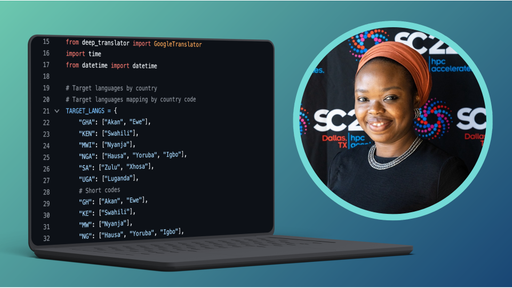
Evaluating AI Safety Through Local Policy: Findings from the UbuntuGuard benchmark
A new paper introducing the UbuntuGuard benchmark questions whether strong results on English-language safety tests consistently translate into responsible use. Built from policies developed by 155 African domain experts across ten languages and six countries, UbuntuGuard's framework assesses whether AI tools comply with the norms that shape services in non-Western contexts. The findings suggest that institutions, wherever they operate, need the capacity to define their own standards before using these tools to improve public-sector outcomes.
Published on Feb 17, 2026 by Elana Banin
AI Infrastructure
Experimentation as Public Infrastructure
Governments are adopting powerful new technologies faster than their systems are built to learn. This piece by Cassandra Madison at the Center for Civic Futures argues that responsible innovation requires more than access to tools. It requires safe, structured spaces for experimentation. By treating experimentation as public infrastructure, governments can learn early, surface risks before they scale, and make better decisions when the stakes are highest.
Published on Feb 2, 2026 by Cassandra Madison
AI Infrastructure
Prediction Isn’t Intelligence: How Predictive Models Really Work in Government
A hiring tool changes your "personality" score based on whether there's a bookshelf behind you in an interview. A hospital model suggests asthmatics are safer—because it learned how to respond to the triage system, not the disease. This InnovateUS workshop explains why predictive AI needs governance, not just accuracy.
Published on Jan 27, 2026 by Stephan Schmidt
AI Infrastructure
Voices in Every Language: How India is Building More Inclusive AI
India's Bhashini platform is democratizing access to digital services for 1.4 billion people by treating multilingual capability as public infrastructure. Through crowdsourced voice donations and open APIs, this initiative could transform how underserved populations access rights and resources that were previously locked behind language barriers.
 InnovateUS