Insights on AI governance, public sector innovation, and democracy
Showing 4 of 4 results in category "AI and Elections"
AI and Elections
Who Decides What Public Money Builds: Democratic and Public AI Becomes Politics
Public money is where Public AI starts, not where it ends. Drawing on Spain, Italy, and the United States, Luca Cominassi and Marco Bani argue that who pays, who controls, and who decides AI’s purpose are political choices Europe should make democratically. With national elections in France and Italy in 2027, they call for putting those choices to voters now.
Published on Nov 5, 2026 by Luca Cominassi and Marco Bani
AI and Elections
Who Wins Texas? Depends on the Evidence
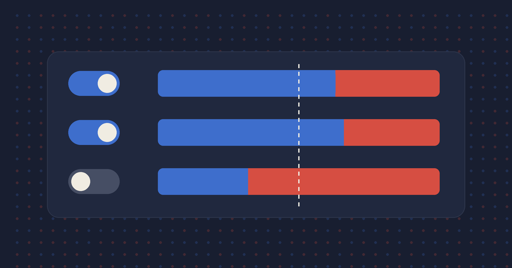
Midterm Night Desk, an experimental dashboard David Lazer built with Claude in a couple of hours, lets readers change the evidence behind an election forecast and watch the favorite flip. The tool shows how quickly data can become something people use. The research behind it shows why trustworthy forecasts still depend on carefully collected, sustained survey data.
Published on Nov 3, 2026 by Elana Banin
AI and Elections
What Is AI For? Four Questions Guiding Reboot This Fall
The public conversation about AI has swung from exuberance to alarm, casting AI as an unstoppable force. That framing overlooks the fact that public institutions design, build, buy, and regulate AI, and societies still choose where it leads. This fall, Reboot is organizing its coverage around four connected questions: what capabilities public institutions need, how they can become institutions that listen and learn, what public AI infrastructure requires, and how we measure whether AI is actually creating public value.
Published on Sep 14, 2026 by Beth Simone Noveck and Elana Banin
AI and Elections
Research Radar: Dreaming Better Elections Into Reality
A new white paper from The Institutional Architecture Lab argues that combating AI-generated deepfakes and synthetic content in elections requires purpose-built institutions. The authors propose Electoral Integrity Institutions that would coordinate across government, tech platforms, and civil society to scan, assess, and respond to synthetic content threats. But the paper also provokes a fundamental question: should we design institutions defensively to react to AI threats, or offensively to build better, more participatory and representative elections?
 InnovateUS