Insights on AI governance, public sector innovation, and democracy
Showing 11 of 11 results in category "AI and International Relations (IR)"
AI and International Relations (IR)
Bellagio: Five Days, 16 Members of Congress, and an Unusually Honest Conversation About AI
Mariana Becerra of the Eleanor Crook Foundation went to the Rockefeller Foundation’s Bellagio Center expecting a conversation about AI and geopolitical competition with bipartisan, bicameral members of Congress. She came back convinced that AI is already reshaping how public health systems function, how advocacy operates, and which organizations will have the capacity to influence policy. Drawing on conversations with lawmakers, researchers, and philanthropy leaders, this piece examines the growing gap between where AI governance debates are happening and the resulting consequences.
Published on May 27, 2026 by Mariana Becerra
AI and International Relations (IR)
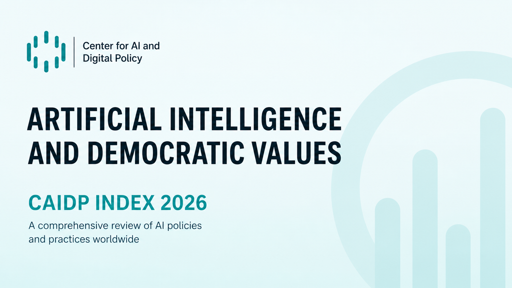
Progress on Global AI Governance: The CAIDP AI Index and Implications for the Public Sector
The 2026 CAIDP AI Index, ranking AI policy commitments across 90 countries, shows that while most governments now agree on core governance principles, the real divide lies in implementation. Many are advancing laws, oversight, and public participation, but progress lags in turning commitments into practice. As the baseline shifts from whether to govern AI to how, the report underscores that outcomes depend less on frameworks and more on the capacity of public institutions—and the civil servants within them—to operationalize these principles in everyday decisions.
Published on May 6, 2026 by April Yoder and Grace Thomson
AI and International Relations (IR)
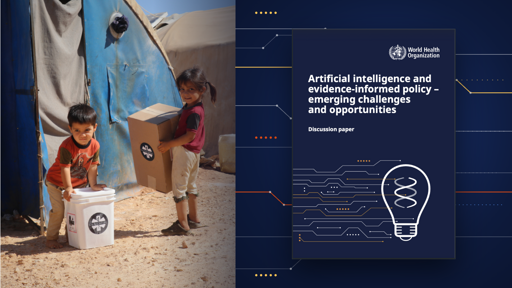
Research Radar: AI as a Multiplier for Evidence-Informed Policy
A new WHO discussion paper explores how AI can accelerate research synthesis and keep evidence continuously up to date. Elana Banin welcomes the push to use AI to strengthen the evidence-to-policy pipeline, but argues the more consequential question is whether AI will redefine what counts as evidence in the first place. The harder constraint will ultimately be institutional, as most health workers lack the training and infrastructure to adopt these tools. Government decision-makers must start building the processes to test AI outputs against frontline knowledge and the capacity to make that adoption defensible.
Published on May 5, 2026 by Elana Banin
AI and International Relations (IR)
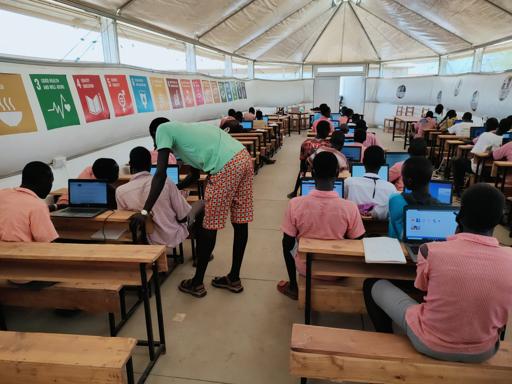
From Access to Opportunity: How Governments Can Build Inclusive AI
Growing up in Kakuma refugee camp, Nhial Deng experienced what it means to be excluded from opportunities. Returning years later, he saw young people using AI not as aid, but as a tool to build skills, income, and futures in real time. This piece argues that AI is already functioning as an economic opportunity layer, but one that remains uneven and fragile without intentional design. Drawing on examples from Canada, Singapore, and Kenya, Deng outlines how governments can move from accidental access to structured opportunity by connecting AI to jobs, embedding it in trusted institutions, and building safeguards alongside deployment.
Published on Mar 25, 2026 by Nhial Deng
AI and International Relations (IR)
Built Against Its People: Iran’s AI Infrastructure of Control
Dr. Sara Bazoobandi examines how Iran’s doctrine of “knowledge jihad” shaped the development of its digital and AI infrastructure, transforming technology into an instrument of state control. The piece traces how this system, built for surveillance and centralized authority, has also created strategic fragility, offering a cautionary lesson for democracies designing the foundations of AI governance.
Published on Mar 18, 2026 by Sara Bazoobandi
AI and International Relations (IR)
Global AI Watch: Korean Public Funds for Global AI Advancements
As Korea aims to become a top-three global AI power, the government has staked its strategy on “sovereign AI” as both an economic and national security priority. In this reflection, originally published in the Herald Insight Collection, Merve Hickok examines Korea’s multibillion-dollar investment in a national foundation model amid U.S.–China competition and the rise of Open-Source AI, asking whether alternative investments—such as small language models, compute and energy efficiency, and AI governance and evaluation—might better secure Korea’s long-term autonomy and global leadership.
Published on Feb 11, 2026 by Merve Hickok
AI and International Relations (IR)
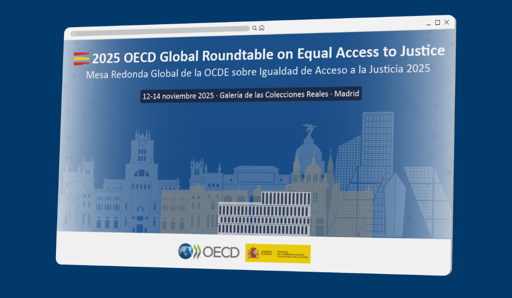
Human by Design: Reflections from the OECD Global Roundtable on Equal Access to Justice
In November 2025, global justice leaders met in Madrid for the OECD Roundtable on Equal Access to Justice to examine how systems can adapt to rising demand and rapid technological change. New Jersey’s Public Defender Jennifer Sellitti's experience highlighted that AI can strengthen fairness and access when deployed with clear safeguards and purpose. By building secure tools, improving legal workflows, and shaping statewide standards on transparency and bias, New Jersey is showing how responsible innovation can reinforce trust and improve justice outcomes.
Published on Dec 8, 2025 by Jennifer Sellitti
AI and International Relations (IR)
Designing AI for Trust: Lessons from Tarjimly’s Translation Platform for Humanitarian Action
When refugees needed language support, Tarjimly turned everyday volunteers into lifelines. In this reflection, CEO Atif Javed traces how the platform evolved from a Facebook Messenger experiment into a global translation network, one now partially powered by AI. His key lesson is that designing for trust means using technology to amplify, not replace, human empathy in moments of crisis.
Published on Nov 12, 2025 by Atif Javed
AI and International Relations (IR)
Global AI Watch: Brazil’s Experiment in AI-Powered Participation
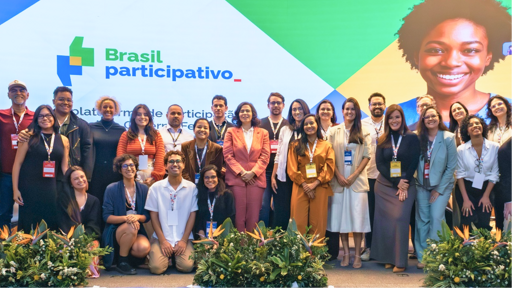
When Brazil's federal government launched its 2023 Participatory Pluriannual Plan, the response was massive: 1.4 million participants submitted over 8,200 proposals through the Brasil Participativo platform. But volume creates a challenge, as manually processing thousands of contributions is slow and resource-intensive, often causing valuable insights to slip through the cracks. Now, Brazil is pioneering an open-source AI system that automatically analyzes citizen feedback, generates comprehensive reports, and tracks which suggestions made it into final policies. The result is a new model for democratic intelligence, one that transforms the flood of public input into structured, actionable knowledge without losing the nuance of individual voices.
Published on Nov 5, 2025 by Christiana Freitas and Ricardo Poppi
AI and International Relations (IR)
The Next UN: AI, Power, and What Global Governance Must Become
In late September, the UN adopted a global AI resolution backed by all 193 Member States, a diplomatic milestone. But one that risks repeating old patterns of top-down governance. The new Reboot Democracy Blog Editor, Elana Banin, argues that legitimacy doesn’t come from declarations, but from grounded, democratic practice. From California to Vietnam, she explores what real AI governance looks like and lays out three strategic tests the UN must pass to matter.
Published on Oct 8, 2025 by Elana Banin
AI and International Relations (IR)
Work with what you have: how Vietnam is using AI as a way to encourage a learning culture among public servants
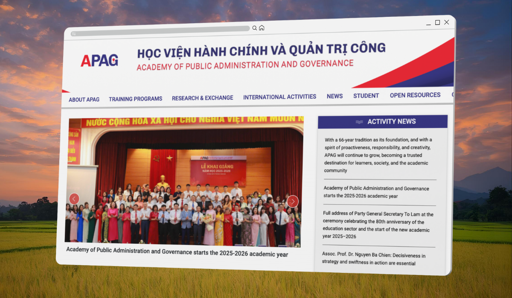
While the West races toward artificial general intelligence, Vietnam is charting a different path with “Applied AI", using tools like ChatGPT to overcome language barriers, limited budgets, and institutional bottlenecks. At the Academy of Public Administration and Governance in Vietnam, civil servants are building AI literacy and shifting to adaptive, tech-savvy governance. With 136 AI-assisted case studies developed in one summer, a new handbook on AI for development, and plans for an AI-powered support chatbot, Vietnam shows how even modest experiments can spark a culture of curiosity, collaboration, and public sector transformation.
 InnovateUS