Insights on AI governance, public sector innovation, and democracy
Showing 15 of 19 results in category "AI and Law"
AI and Law
What Is AI For? Four Questions Guiding Reboot This Fall
The public conversation about AI has swung from exuberance to alarm, casting AI as an unstoppable force. That framing overlooks the fact that public institutions design, build, buy, and regulate AI, and societies still choose where it leads. This fall, Reboot is organizing its coverage around four connected questions: what capabilities public institutions need, how they can become institutions that listen and learn, what public AI infrastructure requires, and how we measure whether AI is actually creating public value.
Published on Sep 14, 2026 by Beth Simone Noveck and Elana Banin
AI and Law
Mississippi's AI Framework Was the Starting Line
Mississippi has released its statewide AI framework. The harder challenge is turning guidance into practice. Drawing on firsthand experience leading the state’s AI workforce efforts, Dr. Kollin Napier of MAIN examines why successful AI adoption depends on sustained investment in training, governance, staffing, and implementation.
Published on Jul 6, 2026 by Dr. Kollin Napier
AI and Law
From AI Adoption to Public Value: InnovateUS Fall 2026 Live Learning Series
AI adoption in government is accelerating. The next challenge is making sure it creates public value. InnovateUS’s Fall 2026 Live Learning Series explores how public professionals can move beyond using AI to measuring its impact, governing it responsibly, and ensuring it improves outcomes for the people and communities government serves.
Published on Jun 30, 2026 by Agueda Quiroga
AI and Law
AI Doesn’t Understand Kichwa: Ecuador’s Case for Inclusive AI Governance in the Justice System
In a new piece for Reboot Democracy, Rodrigo Cetina-Presuel, Marco Tello, and Jose M. Martinez-Sierra examine how Ecuador’s judiciary responded to the rapid arrival of AI by building a participatory governance process rooted in the country’s institutional and cultural realities. Through consultations with judicial officials, the process surfaced a critical gap ignored by most international AI frameworks: current AI systems cannot reliably interpret Indigenous languages or legal contexts such as Kichwa. The result was one of the region’s first judicial AI moratoriums, temporarily prohibiting the use of AI in Indigenous-language cases while Ecuador develops more legitimate and locally grounded governance mechanisms for the future.
Published on May 12, 2026 by Rodrigo Cetina-Presuel, Jose M. Martinez-Sierra and Marco Tello
AI and Law
Governing with Others: The Basque Country Turns Collaboration into Rule of Law
As the Basque Government moves to pass a new Transparency Law this May, it is redefining what transparency means. No longer just about access to information, the law embeds collaborative governance into its core, requiring that decision-making processes be open, traceable, and shaped with others. This piece explores what it looks like to turn participation from a principle into a legal obligation, and what it takes to make participation a structured, accountable part of how policy is made.
Published on Apr 29, 2026 by Xabier Barandiaran
AI and Law
Built Against Its People: Iran’s AI Infrastructure of Control
Dr. Sara Bazoobandi examines how Iran’s doctrine of “knowledge jihad” shaped the development of its digital and AI infrastructure, transforming technology into an instrument of state control. The piece traces how this system, built for surveillance and centralized authority, has also created strategic fragility, offering a cautionary lesson for democracies designing the foundations of AI governance.
Published on Mar 18, 2026 by Sara Bazoobandi
AI and Law
Evaluating AI Safety Through Local Policy: Findings from the UbuntuGuard benchmark
A new paper introducing the UbuntuGuard benchmark questions whether strong results on English-language safety tests consistently translate into responsible use. Built from policies developed by 155 African domain experts across ten languages and six countries, UbuntuGuard's framework assesses whether AI tools comply with the norms that shape services in non-Western contexts. The findings suggest that institutions, wherever they operate, need the capacity to define their own standards before using these tools to improve public-sector outcomes.
Published on Feb 17, 2026 by Elana Banin
AI and Law
Using AI to Improve Public Services in New Jersey: An interview with Dave Cole
New Jersey’s Office of Innovation has received a Public Benefit Innovation Fund grant to expand its AI platform with tools that help residents access benefits faster and with fewer errors. In this conversation, Beth Simone Noveck and NJ Chief Innovation Officer Dave Cole discuss how document processing, eligibility matching, feedback analysis, and memo-generation tools are already improving programs such as Medicaid, Unemployment Insurance, and Summer EBT, and what it takes to deploy AI responsibly within government.
Published on Jan 12, 2026 by Beth Simone Noveck and Dave Cole
AI and Law
Can mid-sized economies come together to build frontier AI?
Conventional Wisdom presents mid-sized economies with two options for accessing advanced AI: rely on American or Chinese systems, or fall behind. Neither choice preserves the technological sovereignty that countries increasingly see as essential. But there is a third path we explore in detail in a recent memo. Collectively, nations outside the US-China duopoly possess substantial computing infrastructure, a majority of the world’s top researchers, and the growing political will to create a third path. The question is whether they can come together to make it work.
Published on Jan 7, 2026 by Elana Banin
AI and Law
The Future of Constituent Engagement with Congress
In testimony before the House Subcommittee on Modernization and Innovation, Dr. Beth Simone Noveck argues that Congress’s challenge is too little institutional capacity to use public input. With committee staff and in-house expertise sharply reduced and more than 81 million constituent communications each year, traditional engagement has become costly, slow, and often performative. Drawing on examples from the U.S., Brazil, Germany, among others, she shows how pairing disciplined engagement design with AI tools can help Congress synthesize public input, surface expertise, and strengthen lawmaking at scale.
Published on Dec 17, 2025 by Beth Simone Noveck
AI and Law
Learning Together to Improve Public Service
Since its creation in 2023, InnovateUS’s training offerings have supported public professionals in making sense of change together, building capacity, and strengthening their ability to make informed decisions in practice. Our Spring 2026 workshop offering, which we’re presenting today, reflects insights from learners, partners, and experts about the challenges facing public service today.
Published on Dec 15, 2025 by Agueda Quiroga
AI and Law
New Tools to Deliver Better Services for all New Jerseyans
Dave Cole, New Jersey’s Chief Innovation Officer, argues that states now have both the opportunity and the responsibility to build durable public infrastructure for responsible AI. With support from the new Public Benefit Innovation Fund, New Jersey will expand its statewide generative AI platform to develop secure tools to automate enrollments and reduce administrative burden, and rigorously test these solutions across partner agencies. Through open-source code, shared training resources, and cross-government coordination, the state aims to model how AI can meaningfully strengthen service delivery.
Published on Dec 11, 2025 by Dave Cole
AI and Law
Humanism Over Hegemony: Inside Italy’s New AI Law
Italy has become the first European country to move beyond implementing the EU AI Act and enact its own sovereignty-driven AI law; one that anchors innovation in public oversight, workers’ rights, human accountability, and sector-specific democratic safeguards. The statute challenges the accelerating, corporate-centric governance model emerging in the U.S., yet it also suffers from limited vision, modest investment, and operational ambiguity. Italy may not win a global race for AI supremacy, but it is trying to redefine the terms of that race by insisting that democratic institutions and not commercial imperatives set the boundaries for how AI enters civic life.
Published on Dec 10, 2025 by Beth Simone Noveck and Luca Cominassi
AI and Law
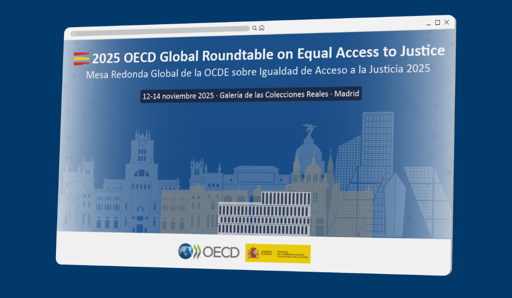
Human by Design: Reflections from the OECD Global Roundtable on Equal Access to Justice
In November 2025, global justice leaders met in Madrid for the OECD Roundtable on Equal Access to Justice to examine how systems can adapt to rising demand and rapid technological change. New Jersey’s Public Defender Jennifer Sellitti's experience highlighted that AI can strengthen fairness and access when deployed with clear safeguards and purpose. By building secure tools, improving legal workflows, and shaping statewide standards on transparency and bias, New Jersey is showing how responsible innovation can reinforce trust and improve justice outcomes.
Published on Dec 8, 2025 by Jennifer Sellitti
AI and Law
Why “Good Guys” Shouldn’t Use AI like the “Bad Guys”: The Failure of Predictive Policing
This essay argues that predictive policing continues to fail not because police departments lack data, but because they are using the wrong kind of data, in the wrong way. Applying low-stakes commercial algorithms to high-stakes decisions can produce dangerous false positives, reinforce biased patterns, and erode public trust in policing. Using examples from Plainfield, NJ, and Chicago, the piece illustrates how predictive systems replicate past police behavior rather than accurately forecasting crime, thereby creating self-reinforcing feedback loops. It contrasts these failures with diagnostic approaches in Oakland and Richmond that utilize data to understand harm, guide outreach, and reduce violence without relying on algorithmic surveillance. The core argument is that policing needs better mirrors, not crystal balls.
 InnovateUS