Insights on AI governance, public sector innovation, and democracy
Showing 15 of 81 results in category "AI and Problem Solving"
AI and Problem Solving
How A.I. Can Be Good for Democracy
In a New York Times guest essay, Beth Simone Noveck makes the case for putting A.I. behind every public servant. She draws on examples from New Jersey, California, the U.K., South Korea and South Australia, and calls for three investments: training the public workforce, giving workers secure access to multiple models, and using government purchasing power to build open, accountable A.I.
Published on Oct 6, 2026 by Beth Simone Noveck
AI and Problem Solving
Project Spotlight: Engaged California — Wildfire Recovery Action Planning
After the 2025 Los Angeles wildfires, California's Office of Data and Innovation used Engaged California to gather more than 1,300 resident comments. AI helped turn that input into 19 policy options, which residents then deliberated over and ranked. Jeffery Marino explains how clear ownership, with state agencies, local governments, and community groups acting together with support from the Governor's office, turned those priorities into a five-part recovery action plan.
Published on Oct 5, 2026 by Jeffery Marino
AI and Problem Solving
Designing Democratic Engagement with AI: A New Course for Turning Public Input into Public Policy
A new free course from the Allen Lab for Democracy Renovation, The GovLab, and InnovateUS teaches public servants how to design AI-enabled public engagement that turns comments into policy, drawing on 42 real-world examples from 20 countries.
Published on Sep 15, 2026 by Dane Gambrell and Sarah Hubbard
AI and Problem Solving
What Is AI For? Four Questions Guiding Reboot This Fall
The public conversation about AI has swung from exuberance to alarm, casting AI as an unstoppable force. That framing overlooks the fact that public institutions design, build, buy, and regulate AI, and societies still choose where it leads. This fall, Reboot is organizing its coverage around four connected questions: what capabilities public institutions need, how they can become institutions that listen and learn, what public AI infrastructure requires, and how we measure whether AI is actually creating public value.
Published on Sep 14, 2026 by Beth Simone Noveck and Elana Banin
AI and Problem Solving
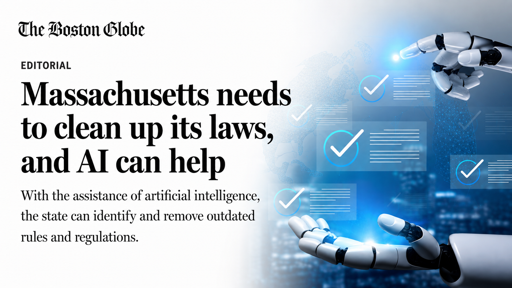
Massachusetts needs to clean up its laws, and AI can help
A Boston Globe editorial argues that Massachusetts should use AI to identify outdated laws, unnecessary reporting requirements, and inefficient regulations, drawing on reforms and pilot programs in other states. Featuring insights from Beth Simone Noveck and Stanford RegLab, it explains how AI-assisted review, paired with human judgment, could reduce administrative burdens and improve government efficiency.
Published on Aug 6, 2026 by Beth Simone Noveck
AI and Problem Solving
Bummed About AI? Democratic Societies Need Public Participation to Shape It
AI presents real risks, but disengagement leaves its future to others. Drawing on principles of negotiation, mediation, and decision-making, this essay by John Lande, Isidor Loeb Professor Emeritus at the University of Missouri School of Law, argues that democratic societies should approach AI as they would any difficult dispute: by carefully weighing risks and opportunities, exercising sound judgment under conditions of uncertainty, and participating in the decisions that will shape its future. This blog is adapted from a University of Missouri School of Law Legal Studies SSRN paper.
Published on Jul 28, 2026 by John Lande
AI and Problem Solving
92NY State of America Summit: American Labor at 250
At 92NY’s State of America Summit, Beth Simone Noveck, Betsey Stevenson, and Allison Pugh discuss AI, the future of American labor, and whether technology will strengthen public voice or erode human connection.
Published on Jul 28, 2026 by Beth Simone Noveck
AI and Problem Solving
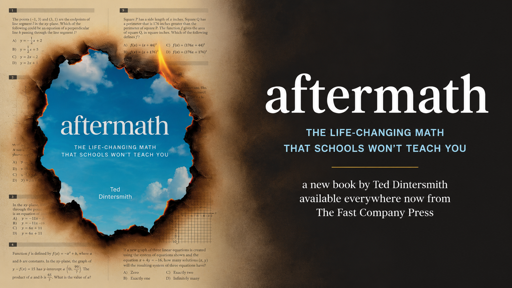
The real math crisis isn’t the test scores. It’s the test
Ted Dintersmith and Beth Simone Noveck argue that America’s high school math curriculum remains rooted in the needs of the 19th century rather than the AI era. They call for replacing an emphasis on rote procedures with quantitative reasoning, statistics, probability, and decision-making skills that people actually use. The authors propose using AI to engage thousands of students, educators, parents, and employers in redesigning math education through large-scale, democratic public participation.
Published on Jul 23, 2026 by Beth Simone Noveck and Ted Dintersmith
AI and Problem Solving
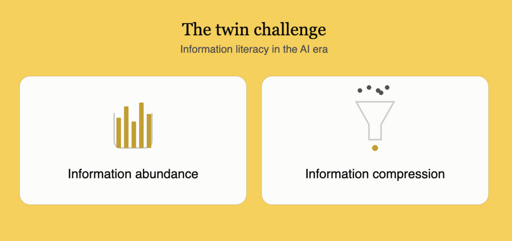
Information Literacy Is No Longer Just an Individual Skill
The debate about AI has focused on misinformation and AI slop, but those are only part of the story. As AI creates both unprecedented information abundance and information compression, we need a new conception of information literacy—one that encompasses how individuals reason, how communities learn together, and how democratic institutions use AI to become better listeners and problem-solvers.
Published on Jul 21, 2026 by Beth Simone Noveck
AI and Problem Solving
From AI Adoption to Public Value: InnovateUS Fall 2026 Live Learning Series
AI adoption in government is accelerating. The next challenge is making sure it creates public value. InnovateUS’s Fall 2026 Live Learning Series explores how public professionals can move beyond using AI to measuring its impact, governing it responsibly, and ensuring it improves outcomes for the people and communities government serves.
Published on Jun 30, 2026 by Agueda Quiroga
AI and Problem Solving
Democracy has a listening problem. These AI tools could actually help
This excerpt from Reboot: AI and the Race to Save Democracy was originally published in Fast Company on June 25, 2026.
Published on Jun 25, 2026 by Beth Simone Noveck
AI and Problem Solving
The Future of AI Runs Through Families: A conversation with Anya Kamenetz
What happens when the people working closest to families are forced to confront AI? In this conversation with Elana Banin, journalist Anya Kamenetz reflects on a three-day workshop that brought together service providers, advocates, technologists, policymakers, journalists, and philanthropists to wrestle with that question. The discussion explores why families have been largely absent from AI governance debates, how to shape the trajectory of technological change, and what it would take to build AI with communities rather than for them.
Published on Jun 15, 2026 by Elana Banin
AI and Problem Solving
The World Cup Is Here. So is VAR. Here's What That Mess Can Teach Us About A.I.
Billions of people are about to watch the World Cup. And millions of them will spend part of it furious, not at the teams, but at football's most contentious technology: the Video Assistant Referee. In this article, Anirudh Dinesh argues we are making the same mistake in how we design, build, and use AI, and shares four lessons VAR can teach us about what happens when you build tech without asking who it's actually meant for.
Published on Jun 10, 2026 by Anirudh Dinesh
AI and Problem Solving
Turning 20 Years of Community Board Data Into Searchable Public Knowledge
Local government generates enormous amounts of public knowledge, but much of it remains buried in disconnected PDFs and difficult-to-navigate archives. This post explores how the Block Party team used AI, semantic search, and human expertise to build a searchable archive of 17 years of Manhattan Community Board 3 resolutions, making local government decisions, institutional memory, and civic participation more accessible to residents, journalists, and public officials.
Published on Jun 9, 2026 by Sarah Sachs and Tal Roded
AI and Problem Solving
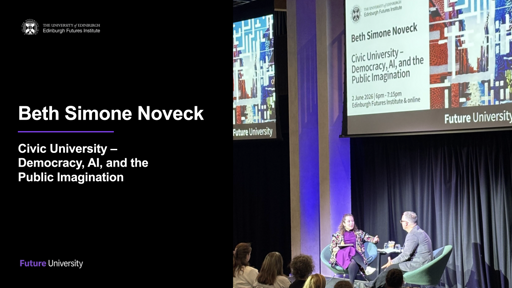
Civic University – Democracy, AI, and the Public Imagination
As AI transforms how we work, learn, and govern, what role should universities play? In this wide-ranging conversation, Beth Noveck argues that universities should become laboratories for democratic problem-solving, where students work with communities to address public challenges. She outlines a vision for "democratic AI" that puts public purpose, participation, and impact at the center of technological innovation.
 InnovateUS