Insights on AI governance, public sector innovation, and democracy
Showing 15 of 43 results in category "AI and Service Delivery"
AI and Service Delivery
Project Spotlight: Engaged California — Wildfire Recovery Action Planning
After the 2025 Los Angeles wildfires, California's Office of Data and Innovation used Engaged California to gather more than 1,300 resident comments. AI helped turn that input into 19 policy options, which residents then deliberated over and ranked. Jeffery Marino explains how clear ownership, with state agencies, local governments, and community groups acting together with support from the Governor's office, turned those priorities into a five-part recovery action plan.
Published on Oct 5, 2026 by Jeffery Marino
AI and Service Delivery
What Is AI For? Four Questions Guiding Reboot This Fall
The public conversation about AI has swung from exuberance to alarm, casting AI as an unstoppable force. That framing overlooks the fact that public institutions design, build, buy, and regulate AI, and societies still choose where it leads. This fall, Reboot is organizing its coverage around four connected questions: what capabilities public institutions need, how they can become institutions that listen and learn, what public AI infrastructure requires, and how we measure whether AI is actually creating public value.
Published on Sep 14, 2026 by Beth Simone Noveck and Elana Banin
AI and Service Delivery
Massachusetts needs to clean up its laws, and AI can help
A Boston Globe editorial argues that Massachusetts should use AI to identify outdated laws, unnecessary reporting requirements, and inefficient regulations, drawing on reforms and pilot programs in other states. Featuring insights from Beth Simone Noveck and Stanford RegLab, it explains how AI-assisted review, paired with human judgment, could reduce administrative burdens and improve government efficiency.
Published on Aug 6, 2026 by Beth Simone Noveck
AI and Service Delivery
From AI Adoption to Public Value: InnovateUS Fall 2026 Live Learning Series
AI adoption in government is accelerating. The next challenge is making sure it creates public value. InnovateUS’s Fall 2026 Live Learning Series explores how public professionals can move beyond using AI to measuring its impact, governing it responsibly, and ensuring it improves outcomes for the people and communities government serves.
Published on Jun 30, 2026 by Agueda Quiroga
AI and Service Delivery
Democracy has a listening problem. These AI tools could actually help
This excerpt from Reboot: AI and the Race to Save Democracy was originally published in Fast Company on June 25, 2026.
Published on Jun 25, 2026 by Beth Simone Noveck
AI and Service Delivery
From digital to AI-enabled government: Kazakhstan's next frontier
Kazakhstan built one of the world’s most advanced digital governments in less than two decades. Now the country is racing into the next phase: AI-enabled governance, sovereign AI infrastructure, and nationwide AI deployment. But this transition is exposing a harder question beneath the ambition: what happens when countries move toward frontier AI systems before large parts of the population have reliable electricity, affordable internet, laptops, or the skills needed to use AI meaningfully?
Published on Jun 3, 2026 by Gulnaz Kordanova
AI and Service Delivery
Research Radar: 10 Things Public Officials Should Know About AI Data Centers
AI data centers are arriving in communities long before most public institutions have figured out how to govern them. Drawing on recent analysis, fieldwork, and an InnovateUS workshop, Deborah Stine examines the questions public officials are now confronting around electricity, water, jobs, infrastructure, public trust, and community impact. She argues that AI data centers are far more than technology projects; they are major public policy decisions that will shape how communities experience the AI economy.
Published on Jun 2, 2026 by Dr. Deborah Stine
AI and Service Delivery
The Future We Build: Hope and Public Service at Code for America Summit
A reflection from Rob Asaro-Angelo, Senior Fellow at the Burnes Center, from the 2026 Code for America Summit on why optimism in government depends on implementation. Drawing from conversations on procurement reform, service delivery, and AI in the public sector, the piece explores how public servants across the country are turning institutional frustration into practical change and why hope becomes credible when people have the tools, authority, and persistence to make systems work better.
Published on May 18, 2026 by Robert Asaro-Angelo
AI and Service Delivery
AI Can Help Our Leaders Be Better
In an article originally published in The Times (Scottish Edition), Beth Simone Noveck argues that AI’s most important democratic use is helping governments listen. Drawing on examples from Camden and Scotland, the piece explores how AI could help public institutions process large-scale public input, strengthen participation, and rebuild trust at a time when governments face rising demand and declining capacity.
Published on May 14, 2026 by Beth Simone Noveck
AI and Service Delivery
Research Radar: AI as a Multiplier for Evidence-Informed Policy
A new WHO discussion paper explores how AI can accelerate research synthesis and keep evidence continuously up to date. Elana Banin welcomes the push to use AI to strengthen the evidence-to-policy pipeline, but argues the more consequential question is whether AI will redefine what counts as evidence in the first place. The harder constraint will ultimately be institutional, as most health workers lack the training and infrastructure to adopt these tools. Government decision-makers must start building the processes to test AI outputs against frontline knowledge and the capacity to make that adoption defensible.
Published on May 5, 2026 by Elana Banin
AI and Service Delivery
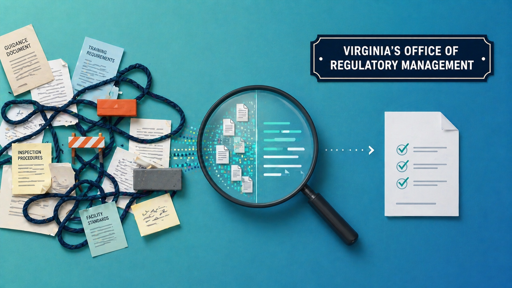
Rethinking Regulation: How Virginia Used AI to Streamline Its Regulatory Code
A new entry in our Rethinking Regulation series, this in-depth case study by Dane Gambrell includes an interview with Reeve Bull, who led the state’s regulatory modernization effort. It traces how Virginia used AI to review decades of accumulated rules, cut regulatory requirements by over a third, and make them clearer and more accessible. It shows how governments can pair strong institutional processes with AI to modernize regulation and improve how it works for the public.
Published on Apr 28, 2026 by Dane Gambrell
AI and Service Delivery
The Next Frontier: AI, Equity, and the Future of Public Benefits
Millions of Americans miss out on health and food assistance benefits due to fragmented systems and complex enrollment processes. This piece explores how Link Health, in partnership with the AI for Impact program, is combining AI tools with human navigators to rethink how public benefits are delivered in healthcare settings. It argues that the next frontier is better evidence. States should fund research to compare enrollment approaches, portal design, and navigator support to determine which improve health outcomes and guide smarter public investment.
Published on Mar 31, 2026 by Timothy Scheinert, Austin Tsai, Ar’Sheill Monsanto and Alister Martin
AI and Service Delivery
Can AI help save us bureaucrats from our bureaucracy?
InnovateUS and the Center for Civic Futures are launching a new series exploring how AI can help human services agencies reduce administrative burden and improve benefits delivery. Drawing on Robert Asaro-Angelo’s experience as Commissioner of New Jersey’s Department of Labor and Workforce Development, this post examines how agencies can use AI to help the public sector improve benefits delivery, reduce administrative burden, and better support both frontline staff and the people they serve.
Published on Mar 16, 2026 by Robert Asaro-Angelo
AI and Service Delivery
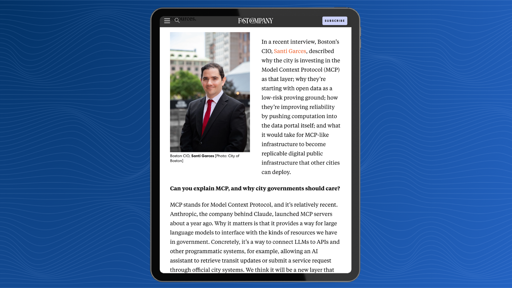
Building an “Agentic Middleware” for the City Government: Boston’s Experiment with Model Context Protocol
Boston is preparing for a future where AI agents increasingly interact with government systems. In this interview, Boston's Chief Information Officer Santiago Garces explains how the city is experimenting with the Model Context Protocol (MCP) as a governance layer between AI and public digital infrastructure. Starting with the open data portal, Boston is testing how MCP can make AI interactions more reliable, secure, and grounded in real government data. The effort provides a concrete example of how to safely support the emerging “agentic web” while improving access to public services.
Published on Mar 9, 2026 by Alberto Rodriguez Alvarez
AI and Service Delivery
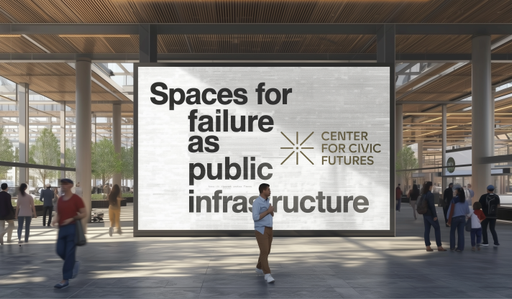
Experimentation as Public Infrastructure
Governments are adopting powerful new technologies faster than their systems are built to learn. This piece by Cassandra Madison at the Center for Civic Futures argues that responsible innovation requires more than access to tools. It requires safe, structured spaces for experimentation. By treating experimentation as public infrastructure, governments can learn early, surface risks before they scale, and make better decisions when the stakes are highest.
 InnovateUS