Showing 15 of 15 results in category "AI for Impact"

Project Spotlight: Co-Designing an AI Tool with Communities
AI for Impact

Project Spotlight: Co-Designing an AI Tool with Communities

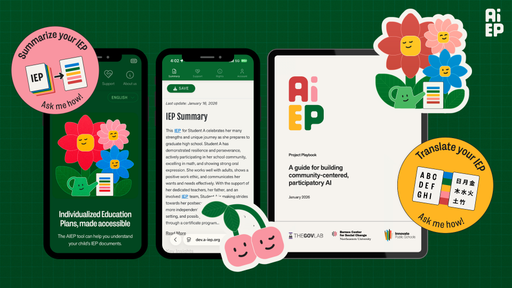
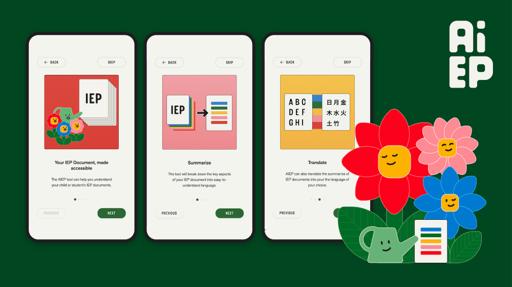
California's AI-EP project made parents co-designers of an AI tool that makes their children's education plans easier to understand. More than 200 families joined the first pilot and came away better able to advocate for their kids. It shows that who you choose to include shapes who the tool serves.

Published on Sep 27, 2026 by Joanna French

Information Literacy Is No Longer Just an Individual Skill
AI for Impact

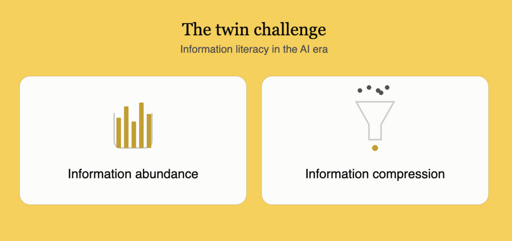
Information Literacy Is No Longer Just an Individual Skill

The debate about AI has focused on misinformation and AI slop, but those are only part of the story. As AI creates both unprecedented information abundance and information compression, we need a new conception of information literacy—one that encompasses how individuals reason, how communities learn together, and how democratic institutions use AI to become better listeners and problem-solvers.

Published on Jul 21, 2026 by Beth Simone Noveck

Democracy has a listening problem. These AI tools could actually help
AI for Impact

Democracy has a listening problem. These AI tools could actually help

This excerpt from Reboot: AI and the Race to Save Democracy was originally published in Fast Company on June 25, 2026.

Published on Jun 25, 2026 by Beth Simone Noveck

From Learning to Doing: An AI Coach for Public Engagement
AI for Impact

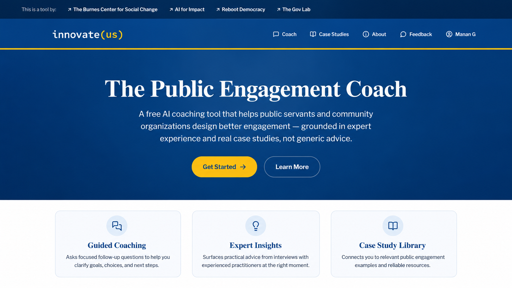
From Learning to Doing: An AI Coach for Public Engagement

A new AI for Impact-engineered public engagement coach is helping public servants turn what they learned about engagement into practical action. Built by The GovLab, the tool guides practitioners through real planning decisions, asks targeted questions about their specific project, and draws on engagement frameworks, case studies, and practitioner expertise to help them design more effective public participation processes.

Published on Jun 22, 2026 by Manan Gangwani, Kushal Pendekanti and Cevdet Batuhan Isik

The Future of AI Runs Through Families: A conversation with Anya Kamenetz
AI for Impact

The Future of AI Runs Through Families: A conversation with Anya Kamenetz

What happens when the people working closest to families are forced to confront AI? In this conversation with Elana Banin, journalist Anya Kamenetz reflects on a three-day workshop that brought together service providers, advocates, technologists, policymakers, journalists, and philanthropists to wrestle with that question. The discussion explores why families have been largely absent from AI governance debates, how to shape the trajectory of technological change, and what it would take to build AI with communities rather than for them.

Published on Jun 15, 2026 by Elana Banin

Research Radar: The Six-Word Problem: Will Voice Improve How We Research the Impacts of AI?
AI for Impact

Research Radar: The Six-Word Problem: Will Voice Improve How We Research the Impacts of AI?

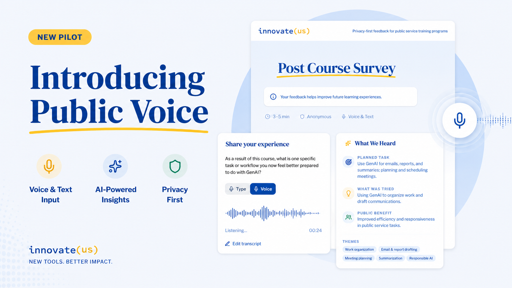
AI for Impact Fellows Sai Punith Kolla and Swaapnika Chowdary Cherukuru built Public Voice, a lightweight voice-based feedback tool designed to capture concrete examples of how learners apply AI in practice. The piece explores the design challenge behind the tool, why voice responses may produce richer evidence than text surveys, and what it means to measure whether public-sector AI training is translating into real workflow change.

Published on May 26, 2026 by Sai Punith Kolla and Swaapnika Chowdary Cherukuru

What Good AI In Government Actually Looks Like
AI for Impact

What Good AI In Government Actually Looks Like

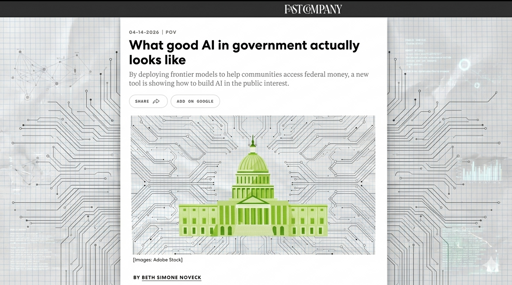
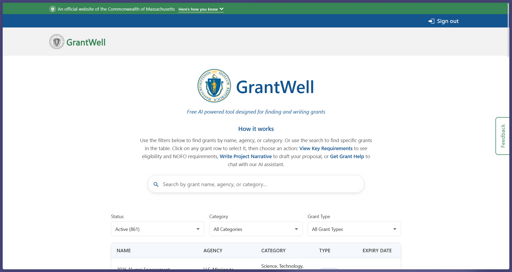
More than $1 trillion in federal grants flows to communities each year, but complexity keeps much of it out of reach. This piece by Beth Simone Noveck, published by Fast Company, explores how AI can either deepen that gap or help close it. The solution is GrantWell, a community-centered tool designed with local governments to make funding accessible and public systems work as intended. Launched in Massachusetts and expanding to additional states, it shows how AI can help communities claim the resources already set aside for them.

Published on Apr 14, 2026 by Beth Simone Noveck

The Next Frontier: AI, Equity, and the Future of Public Benefits
AI for Impact

The Next Frontier: AI, Equity, and the Future of Public Benefits

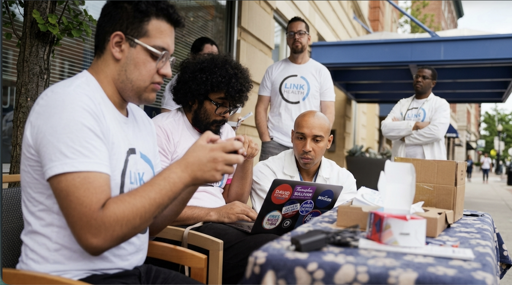
Millions of Americans miss out on health and food assistance benefits due to fragmented systems and complex enrollment processes. This piece explores how Link Health, in partnership with the AI for Impact program, is combining AI tools with human navigators to rethink how public benefits are delivered in healthcare settings. It argues that the next frontier is better evidence. States should fund research to compare enrollment approaches, portal design, and navigator support to determine which improve health outcomes and guide smarter public investment.

Published on Mar 31, 2026 by Timothy Scheinert, Austin Tsai, Ar’Sheill Monsanto and Alister Martin

Healey-Driscoll Administration Launches GrantWell, a First-of-its-Kind AI-Powered Tool to Assist Communities with Applying for Grants
AI for Impact

Healey-Driscoll Administration Launches GrantWell, a First-of-its-Kind AI-Powered Tool to Assist Communities with Applying for Grants

The Healey-Driscoll Administration has launched GrantWell, a free AI-powered tool developed with Northeastern University’s Burnes Center for Social Change to help municipalities more easily access and apply for federal and state funding. GrantWell helps you summarize complex grant requirements, identify opportunities, and draft early-stage proposals, reducing administrative burden and expanding capacity to secure resources

Published on Mar 24, 2026

Reducing Friction in Federal Funding: How Massachusetts Built GrantWell
AI for Impact

Reducing Friction in Federal Funding: How Massachusetts Built GrantWell

Massachusetts municipalities are eligible for an estimated $17.5 billion in federal funding, but accessing it is often harder than securing it. In partnership with the Massachusetts Federal Funds and Infrastructure Office, the Burnes Center for Social Change is launching GrantWell, an AI-powered tool designed to reduce the friction that keeps many communities from applying. Anjith Prakash, lead engineer at GrantWell, explains how the tool helps users find opportunities, understand requirements, and move local needs into competitive applications, expanding access to funding.

Published on Mar 24, 2026 by Anjith Prakash Chathan Kandy

How We Co-Designed an AI-Powered Tool for IEPs with Families in San Francisco
AI for Impact

How We Co-Designed an AI-Powered Tool for IEPs with Families in San Francisco

As the AIEP project concludes its first pilot in San Francisco, it offers more than a new AI tool for navigating IEPs. It shows what becomes possible when families, educators, designers, and researchers co-design technology from the ground up. Through a free, open-source tool, a civic AI learning course, a community-centered playbook, and academic research, this work demonstrates a practical model for public-purpose AI rooted in lived experience, shared learning, and accountability. What began as support for parents has grown into a blueprint for building AI with communities, not just for them.

Published on Feb 10, 2026 by Sofía Bosch Gómez, Joanna French and Belén Farmer Martinez

Wicked Decluttering
AI for Impact

Wicked Decluttering

What if the problem with government wasn’t too many rules, but how they’re organized? Boston’s permitting overhaul with AI for Impact shows how AI and collective intelligence can simplify the user experience without eroding the safeguards that matter.

Published on Feb 4, 2026 by Beth Simone Noveck

Research Radar: “Unboxing the Prompt”: How Community Feedback (and AI) Helped Us Build Better AI Together
AI for Impact

Research Radar: “Unboxing the Prompt”: How Community Feedback (and AI) Helped Us Build Better AI Together

Families are expected to advocate for their children using IEP documents that are dense, technical, and often inaccessible. Instead of treating AI as a black box that produces generic summaries, this project takes a different approach of "unboxing the prompt" and inviting parents into the system's core logic. This post traces how community feedback reshaped the tool at every stage, from moving beyond one-size-fits-all summaries to extracting legally meaningful details, to designing for privacy, to preserving meaning across languages, and to foregrounding student strengths.

Published on Feb 3, 2026 by Dhruv Kamlesh Kumar

When Communities Lead, Appropriate Tech and Change Follow
AI for Impact

When Communities Lead, Appropriate Tech and Change Follow

Co-designed with parents, the AIEP tool is both a technical solution and a catalyst for civic power for families of children with diverse abilities. By building AI literacy through in-person training and WhatsApp-based courses, the project offers a model for community-centered technology, making education systems more navigable and equitable. AI tools can open doors to access and advocacy, but it’s human connection and support networks that give those tools meaning. That is where the most powerful change is taking shape, and where investment matters most.

Published on Sep 30, 2025 by Sofía Bosch Gómez

Designing AI With Communities: the AIEP Project
AI for Impact

Designing AI With Communities: the AIEP Project

Together with hundreds of families, the Burnes Center for Social Change and Innovate Public Schools are co-designing an AI-powered tool designed to empower families to better understand and engage with their child’s individualized education plan (IEP). This free, open-source platform aims to eliminate key barriers families face when engaging with IEPs, which are often are lengthy and packed with specialized educational jargon, making them challenging to understand. By integrating community perspectives into the heart of the platform's technological design, the project aims to ensure that the AI tool reflects and serves the needs, values, and aspirations of the people who will use it.

Published on Apr 15, 2025 by Sofía Bosch Gómez